Showing posts with label white-eyed vireo. Show all posts

Wednesday, April 17, 2013

Christmas in April: Arrivals Pouring In!

Blue-gray gnatcatcher.   


This spring every new day feels a little bit like Christmas morning.

It was a brutal, long, gloomy winter here in southeastern Ohio and springlike weather has been slow to arrive. But now that the insect-eating songbirds are beginning to make their spring appearances, I awake each morning full of anticipation about what gifts may have flown in from the south on the night breezes. This is why it's Christmas-like. Just like every Christmas Day morning for the past five decades, I'm rearing to go and full of "Can't wait!"

Often, these last few weeks, my very first thought—before my eyes are open—is: "I'll bet today is the day that the hummingbirds (or tree swallows, or blue-winged warblers, or wood thrushes) get back." The little, brightly feathered "presents" that Nature brings us each spring—in dribs and drabs at first, then in a marvelous gush of song and color as migration reaches its peak.

Oddly our current spring migration has been somewhat inconsistent with our records for returning dates of migrants. Hummingbirds are several days late. Tree swallows are back all around us but ours have not appeared, making us worry about their fate. Only a few warblers have come back—so far no tanagers or orioles. 

Male yellow warbler.


It's all right. Let them take their time. After all, the anticipation is almost as wonderful as seeing and hearing an old familiar friend, returned from a winter away from this old ridgetop farm.

White-eyed vireo. 
My first vireo of the spring was a male white-eyed vireo that was singing in our orchard on April 11, several days early according to our records. [We've been keeping arrival, departure, and nesting records here on Indigo Hill for 20 years. White-eyed vireos usually arrive each spring on April 15 or 16.]


Singing male ovenbird. Photo by Julie Zickefoose.
I was giddy to hear an ovenbird on Monday of this week. His song is so loud and percussive that it's hard to miss. I'm sure he was not back sooner. He was drifting around the old orchard to the west of our house, singing half-heartedly. By early May our woods will be ringing with the songs of ovenbirds and a dozen other warbler species.

Like the song says: "Springtime, you know it is my songbirds' sing time." And that's music to my ears.

Thursday, September 8, 2011

Vireotown

Red-eyed vireo

We have three species of vireos that nest on our farm here in southeastern Ohio: red-eyed, white-eyed, and yellow-throated. There are three others that we see each spring and fall, just passin' through: blue-headed (formerly solitary and I can't seem to remember to use the "new" name), warbling, and Philadelphia. If we really stretched our birding fantasy list to the extreme I suppose we could one day see a Bell's vireo here at Indigo Hill, but if we do, that sighting will get its very own blog post.

White-eyed vireo

All summer long we hear the red-eyeds singing almost constantly. Yellow-throateds seem to be more selective singers, but when they do sing, they do it a lot. Their hoarse-sounding question-and-answer song seems to come mostly from our oak woods.

White-eyeds sing a ton during courtship, then not at all during nesting it seems. I wonder if the tree-top-loving red-eyeds and yellow-throateds sing more regularly (or the white-eyeds less) due to their relative exposure to predators. A red-eyed vireo singing in the top of a tulip poplar is very hard to find. A white-eyed may be skulking in the shadows, but it's usually at eye level or below in a patch of brushy habitat. Does this make them more susceptible to predators?


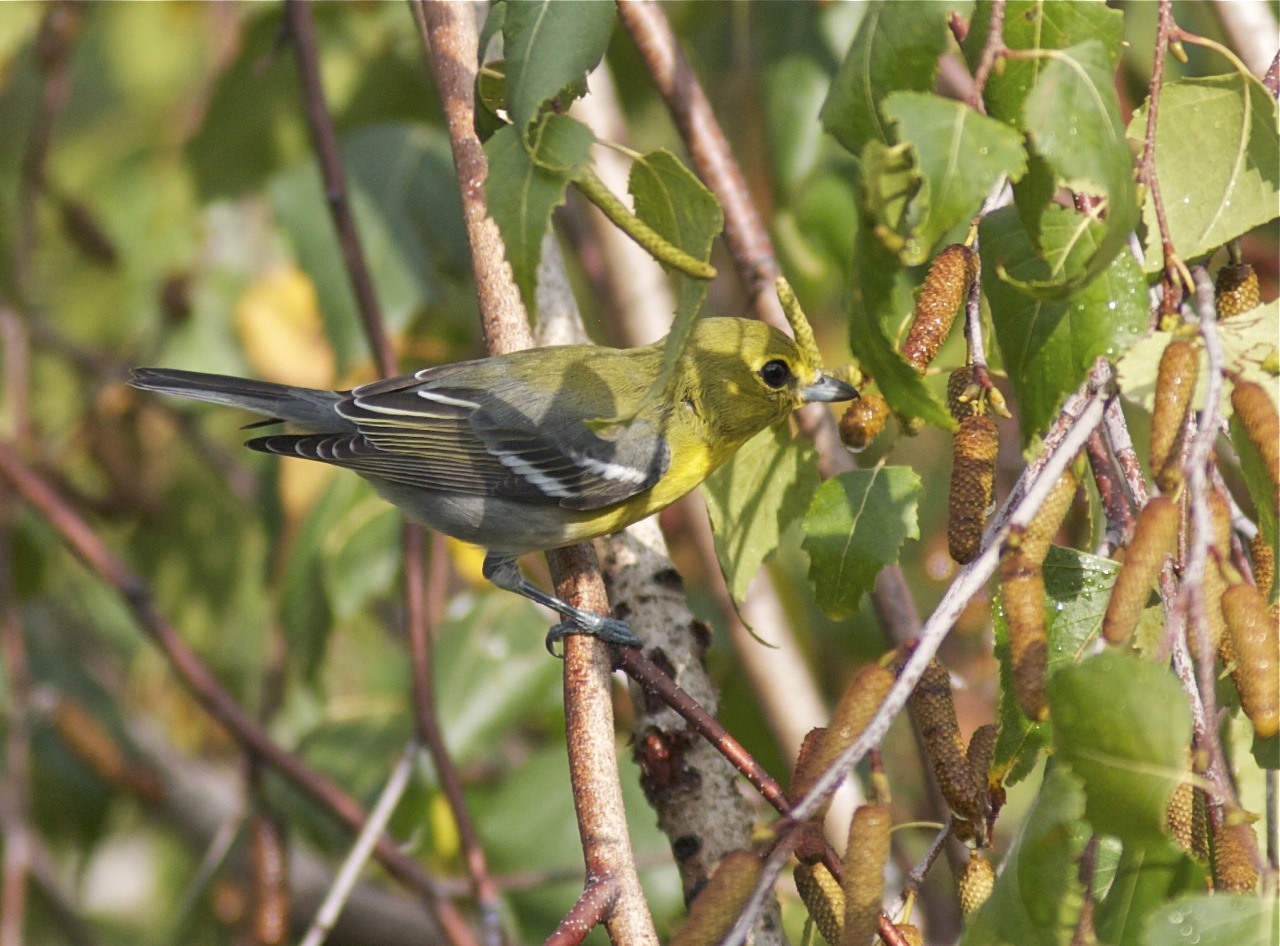
Yellow-throated vireo

Now that fall migration has started, these vireos can still be heard singing, though with nowhere near the intensity of the earlier seasons. The other notable behavior of fall migration is the aggressiveness of the red-eyed vireos. They zip and swoop from tree to tree, often chasing other birds. I imagine these other birds thinking "What the heck? Leave me alone!" I'm sure this behavior has something to do with the fluctuation in hormone levels brought on by the end of the breeding season and the onset of fall migration.

The red-eyeds remind me of teenage boys who, when they find themselves just standing around doing, nothing get the sudden urge to punch a nearby shoulder. This punch often elicits another, and so on.

Our vireos' aggressiveness sometimes pays nice dividends, like this morning when a pair of (probably young) red-eyeds chased two warblers out of deep cover in our sycamore tree: one was an adult male black-throated blue (my favorite North American warbler) and the other was a yellow-throated warbler—both firsts for this fall.

Philadelphia vireo

Later in September we start sorting through the vireos more carefully, looking for a Philadelphia vireo. We see far more of them in fall than in spring migration. It's one of the many treats of autumn that makes the leaving of summer just a little easier to take here in Vireotown.